
Execution Failure Is Rarely a People Problem. It’s Usually a Design Problem.
- shauncritten
- Feb 3
- 2 min read
Most successful programmes have sound strategy, strong governance, and well-defined delivery processes. Milestones are tracked. Risks are managed. Progress is reported. On paper, execution looks controlled.
What’s more interesting is not whether delivery succeeds or fails — but how much effort is required to keep execution stable as complexity increases.
In many environments, execution begins to degrade quietly. Decisions take longer. Standards become less explicit. Teams rely more heavily on judgement and goodwill to compensate for ambiguity in the operating environment. Nothing appears broken, yet consistency slowly erodes.
When this happens, the default response is behavioural. More urgency. Tighter oversight. Renewed emphasis on accountability. The implicit assumption is that people need to try harder.
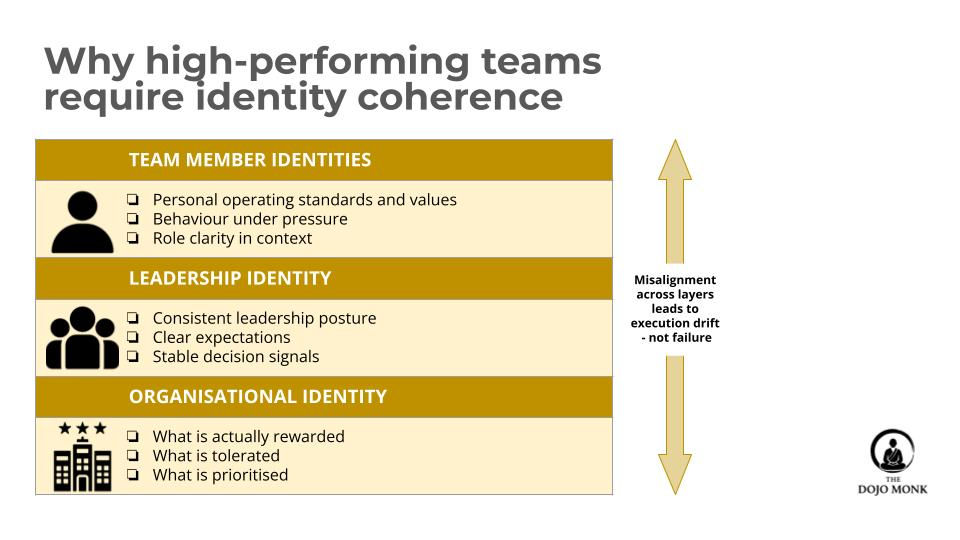
In practice, execution problems are rarely caused by a lack of capability, motivation, or professionalism. They tend to emerge from the way work is designed and signalled.
Decision rights blur. Incentives pull in different directions. Expectations shift without being restated. Over time, individuals adapt rationally to the system around them. They hedge decisions. They preserve optionality. They optimise locally rather than collectively. These behaviours are not resistance — they are responses.
High-performing teams are often the most exposed. They are trusted. They are autonomous. Standards are assumed rather than articulated. The system relies on judgement instead of structure. That works — until complexity outpaces the design meant to support it.
At that point, leaders often focus on performance symptoms rather than execution architecture.
The more useful question is not “Why aren’t people executing?”It is “What have we designed — or failed to design — that makes consistent execution harder than it needs to be?”
Execution rarely collapses because people stop caring. It
erodes when the environment no longer supports the behaviour it expects.


Comments